
In our latest interview, Nick shares what 25 years of experience in bakery automation have taught him.
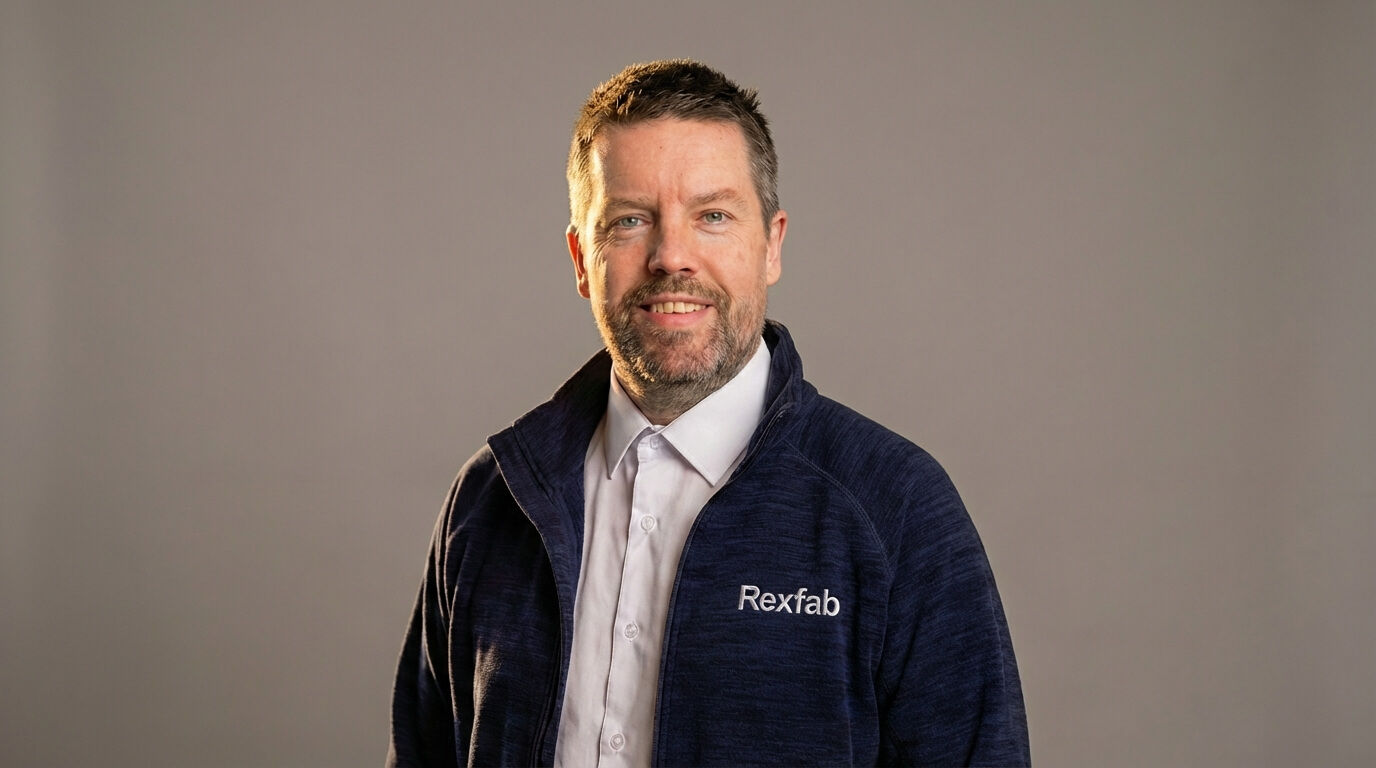
First of all, [laughs] I don’t consider myself an expert. I see myself as someone with experience—someone who has seen the evolution of the bakery industry, who has lived through the changes, and who has seen how customer needs have evolved over time. We make a point of staying up to date with new technologies so we can always bring solutions that help customers improve their processes and production, and become more efficient..
How long have you been doing this?
It’s been a little over twenty-five years that I’ve been doing this now, yes.
And what is it that you do?
Right now, what I do is develop solutions for customers. I work based on input from the sales team, and then, depending on customer requests, we develop different solutions. First and foremost, it’s about understanding the customer’s needs—understanding what the customer is really looking for. Sometimes, that also means asking questions to see a bit beyond what the customer initially identifies as their need. That can allow us, at times, to identify other issues that are located elsewhere than where the original request for intervention or help is. Sometimes it helps us realize that the problem may actually be another part of the process, either upstream or downstream. It can be related to mechanics, automation, operations, interventions, or maintenance.
“My role is to help customers understand their real needs — sometimes even the ones they don’t see yet.”
Are customers always clear about what they need? Do they really know what they want at the time?
Sometimes, yes. Sometimes it’s very clear. Customers can identify the issues or needs, or sometimes it’s simply about changing the process entirely. So we don’t start from a blank page, but the goal is to change something. It can be a new plant, for example. In a new plant, we’re looking to propose a better solution based on the type of product the customer will be making.
What proportion would you say of customers are very clear about their needs, and how many are not?
What I’m about to say, you probably won’t want to put it in writing, because it might [laughs] frustrate customers—but more and more, people don’t have the experience or a full understanding of their own plant. So they need people with experience to develop solutions, to understand problems they’re facing that sometimes they aren’t even aware of.
Would you say you’re one of those people customers need to better understand their operational problems?
In some situations, yes, I can play that role. Not in every aspect of a bakery—there are areas I don’t master, like ingredients or certain internal processes such as shipping. But everything that happens between the mixer and shipping, we have strong knowledge to help develop solutions for customers.
Can you give a few examples where you helped customers clarify their needs—cases where they came in with one request, and after discussions, things changed?
Yes… I’m thinking.
[pause, laughter]
There are many examples. We tend to remember the more recent ones. One recent project: customers asked us to integrate spiral conveyors to move pans in steeply inclined sections. I explained that we also build pan cleaners where pans are inverted. Having steep inclines to move pans quickly—often conveyors are kept high to free floor space—can seem risky. But we have tools like magnetic conveyors and other technologies that allow us to keep conveyors simple, manage steep inclines, and maintain full control of the pans. Customers are often afraid of this at first, but once it’s installed, they see the simplicity and the benefits.
Another example: some systems used to space products in coolers actually create more problems than they solve. Products become misaligned and arrive disorganized at packaging. Sometimes customers believe these systems help, but in reality, they cause bigger issues.
Other times, it’s about transfers—conveyors, feeding machines, controlling products, accumulation and buffering to reduce stops and jams. Helping customers realize where the real issue is can completely change the solution.
Very good example. What reactions do customers have when they go through this learning process and see the simplicity of the design?
For customers who already work with us, this is exactly the service they expect—developing solutions before even supplying equipment. That’s why they come back. For new customers, it’s about demonstrating how we can help compared to other expertise in the market. Sometimes cost can be a challenge, but the key is showing the value of having engaged people who truly care about customer needs.
If I were your customer and said, “Nick, help me increase capacity and improve my packaging line,” what would you do first?
It’s always the same question: what is currently limiting your production? What causes the most downtime? Sometimes people think packaging is the problem, but it’s actually an upstream system that stops. You have to identify what causes the most frequent stops, then their duration, and work from there.
How often does the customer know the answer to those questions?
Most of the time they know which element is problematic. Sometimes it’s just one step that causes a stop and can be fixed easily. Then the second issue turns out to be more complex.
What happens when a customer asks for something you’ve never done before?
Two possibilities: either it’s within our expertise and we move forward with the customer, or we guide them toward another supplier. We won’t take on a project if we can’t truly help.
Do you have examples of projects you hadn’t done before but still helped with?
Yes. For example, a pan accumulator (“buffer”). We developed it for a customer and now it’s a product we can offer. Many of our current products started that way. Pan stackers, basket systems, pan cleaners—customers came to us with problems and asked if we could do better. Through partnerships, we developed solutions like the pan inverter cleaner, electric stackers and unstackers. That’s how our portfolio grew.
“A good solution isn’t just for today — it’s designed for the future.”
Once you understand the customer’s need, what are the three main steps you follow to design a solution?
Once we have all the information—products, capacities, plant layout—we design the solution. If it’s clearly defined, we lay out the equipment and conveyors, present the technical capabilities, and make sure the solution will never be the bottleneck in the future. If there are multiple options, we present different scenarios—more space, more flexibility, more compact layouts—so the customer can choose based on priorities and budget.
How long should a well-designed solution last?
Twenty-five years.
We often replace equipment that’s 20–30 years old. That’s what we aim for.
Wow! Why am I better off working with you instead of buying equipment myself and integrating it?
Because we’re present throughout the entire process—from solution development to installation and service. If there’s a problem, we stay involved until we deliver what we committed to.
Have you seen projects go wrong?
Yes. When that happens, we create a tactical team, involve engineering, redesign if needed, and reinvest time and resources to make it work—even if it wasn’t planned.
That says a lot about your company philosophy.
Exactly.
Could you do your job alone, without your colleagues?
No. Nothing is done by one individual. It takes engineering, procurement, fabrication, logistics, installation—many different expertise working together.
Sounds like a great place to work.
It’s incredible.
Perfect. Thank you very much, Nick.

Expert Mix Eric Brochu
Éric décrit les méthodes industrielles comme un lien bidirectionnel entre l’ingénierie et la fabrication. Des dessins complets, des côtes et des tolérances claires, des matériaux appropriés et des choix de machines cohérents contribuent à prévenir les interruptions et à réduire l’improvisation. Les estimations des temps de fabrication facilitent la planification, tandis que les commentaires du plancher de production aident l’ingénierie à simplifier les pièces et à réduire les étapes de fabrication ou les coûts des matériaux. La faisabilité des demandes sur mesure est évaluée avant leur mise en production. Ensemble, ces pratiques contribuent à maintenir une qualité constante, à rendre la fabrication plus efficace et à offrir des produits plus compétitifs aux clients.

Expert Mix Kaven Croft
In this Rexfab Experts interview, Kaven Croft, Engineering Systems Director, explains how collaboration, system-wide thinking, and hands-on expertise help turn operational needs into flexible, reliable solutions built for long-term value.

Expert Mix Raphaël Proulx
In this Rexfab Experts interview, Raphaël Proulx shares how nearly a decade of engineering experience has shaped his approach to technical support, customer collaboration, and problem-solving. From equipment design and startup to troubleshooting and after-sales service, Raphaël explains why understanding the full production context is essential to delivering effective, long-term solutions. His role as a Resale Technical Expert also highlights the importance of gathering, analyzing, and translating field information into actionable improvements for customers, Rexfab teams, and technology partners.